The org chart of yesteryear, a map of who's who in the company. Who doesn't feel a bit of romantic appreciation for it? Like a feudal monarchy, with a king or queen at top, then dukes/duchesses, barons, knights, and finally the peasants and serfs at the bottom. Everyone in their rightful place.
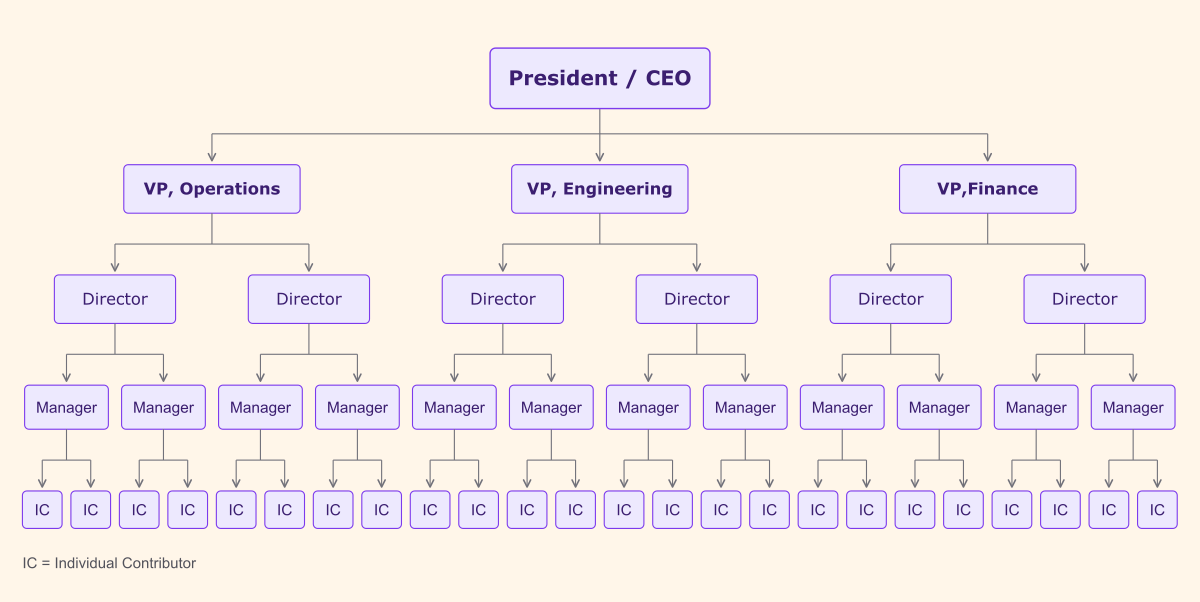
A work of classic art, really. Picture the muckety-mucks of yore spending countless hours poring over these candle-lit parchments, rearranging, classifying, pigeonholing, siloing, and ostensibly optimizing their organizations for peak efficiency. This chart has certainly earned its place in the museum, alongside the Gutenberg printing press and the first Ford Model T. It looks odd to us today, but it's still a gorgeous relic of the before-time.
Fortunately for us, no business (well, no serious business anyway) actually uses these charts anymore. They had their place, at one time, but even then, the flaws were obvious and blatant. Communication broke down both vertically and horizontally no matter how many lines were drawn between the boxes. And despite what all those motivational posters in the break room told us, the very design of the chart itself screamed "top = most important" and "bottom = least important". The chart became company culture, and professional success meant moving upward in it, for a fortunate few. What a crude and demeaning way to arrange human beings! But professionals of the past virtually worshipped it. Thankfully, it's all a distant memory.
And as we all already know, org charts aren't just for humans anymore. We work alongside AI Agents every day. Remember when we were saying things like "AI won't replace humans, it will empower humans!" (Oh boy, I still chuckle a bit at that one.) Of course, it didn't take long before we realized some of those AI Agents were better, faster, and far cheaper than their human counterparts. In a remarkably short amount of time, the chart evolved into what we recognize today.
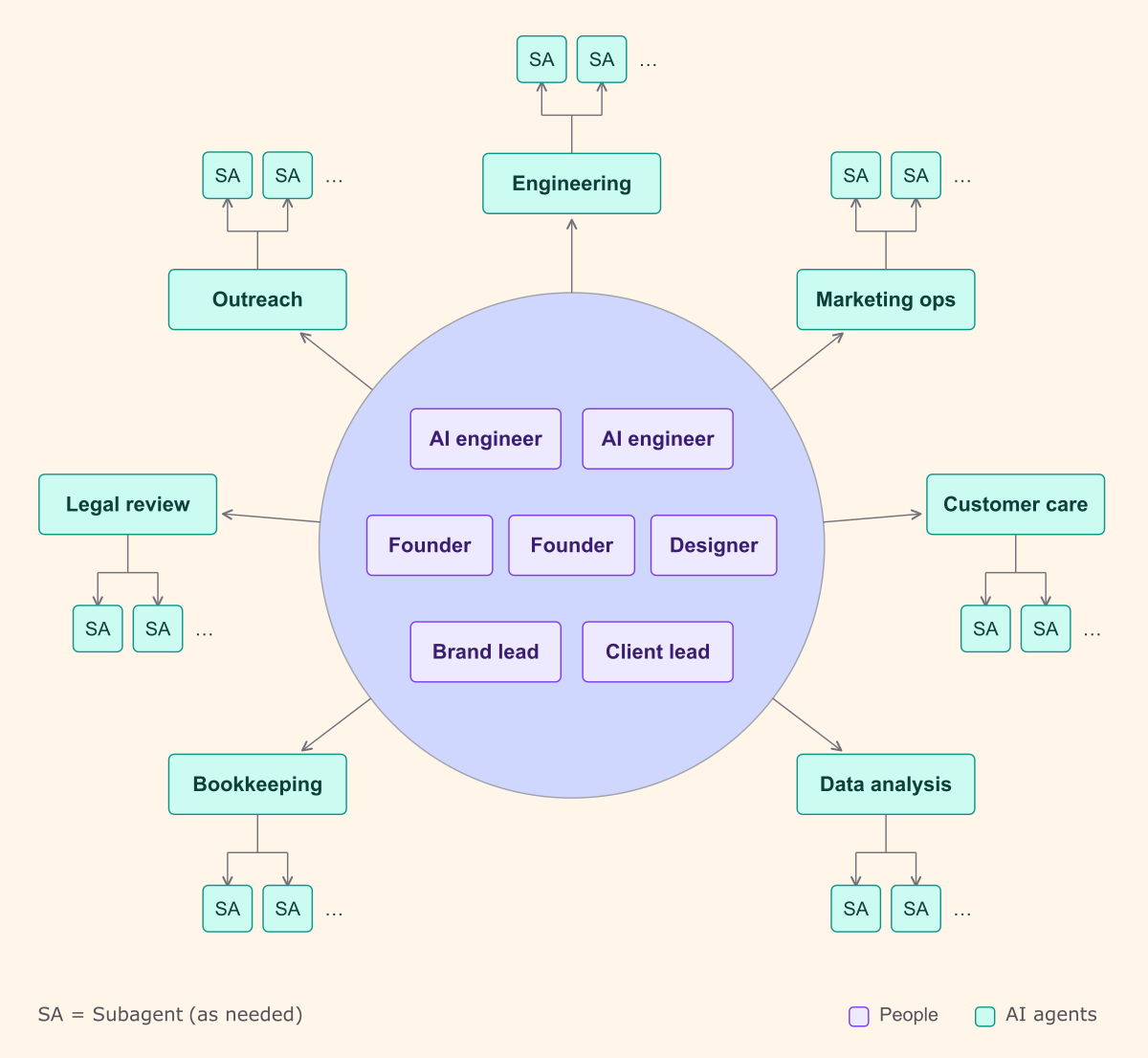
Sleek, efficient, flexible, and instantly scalable. All the roles that humans excel at were still filled by humans, and everything better handled by AI was now done with AI. Of course, when we adopted the new way, a lot of white-collar roles traditionally handled by humans before the revolution were conspicuously missing. And middle management? Well, they had a good run, so they really couldn't complain when they weren't needed anymore. Even better, there were no more corporate ladders to claw our way up, so everyone could contribute exactly what they were worth to the organization at all times, and AI enabled them to do it.
This was a rather sudden and disruptive event in our economy, that's something everyone remembers. The change was inevitable, and people chose to deal with that fact in different ways. Some of us got angry... at AI? Like a person who'd been pounding nails into boards with their bare fists their whole lives getting angry at a hammer. It didn't make any sense, but then, emotions were high. Some of us chose to complain, very loudly, over the water cooler, at family reunions, but mostly on social media. Perhaps we were hoping that all that complain-energy, like some magic spell, would somehow alter the reality of the situation.
Then some people tried plain old resistance. They promoted the idea that the entire world should pump the brakes on AI, slow things down, and give economies time to adapt. Sensible, but completely unrealistic. We realized this approach would set up a classic game theory situation where the first player to break the agreed-upon rules would win everything. Then what? Would we start flinging missiles at the rule-breakers? Descend into world war to preserve a form of economy that had no future anyway? I think everyone's glad we weren't that stupid.
So everything broke, for a little while. But the world didn't end, and in an astonishingly short amount of time we built something much better. And AI helped us build it, imagine that! The revolution made us stop and think, what does it really mean to be human in the first place? What parts of humanity did we want to preserve, and what elements of the human condition did we want to let go of? And we concluded the change didn't have to be bad if we didn't want it to be. We could make it a good thing, for all humanity. And we did!
Anyway, a pleasant trip down memory lane that started with the lowly and archaic org chart, and ended up right back here in the present.
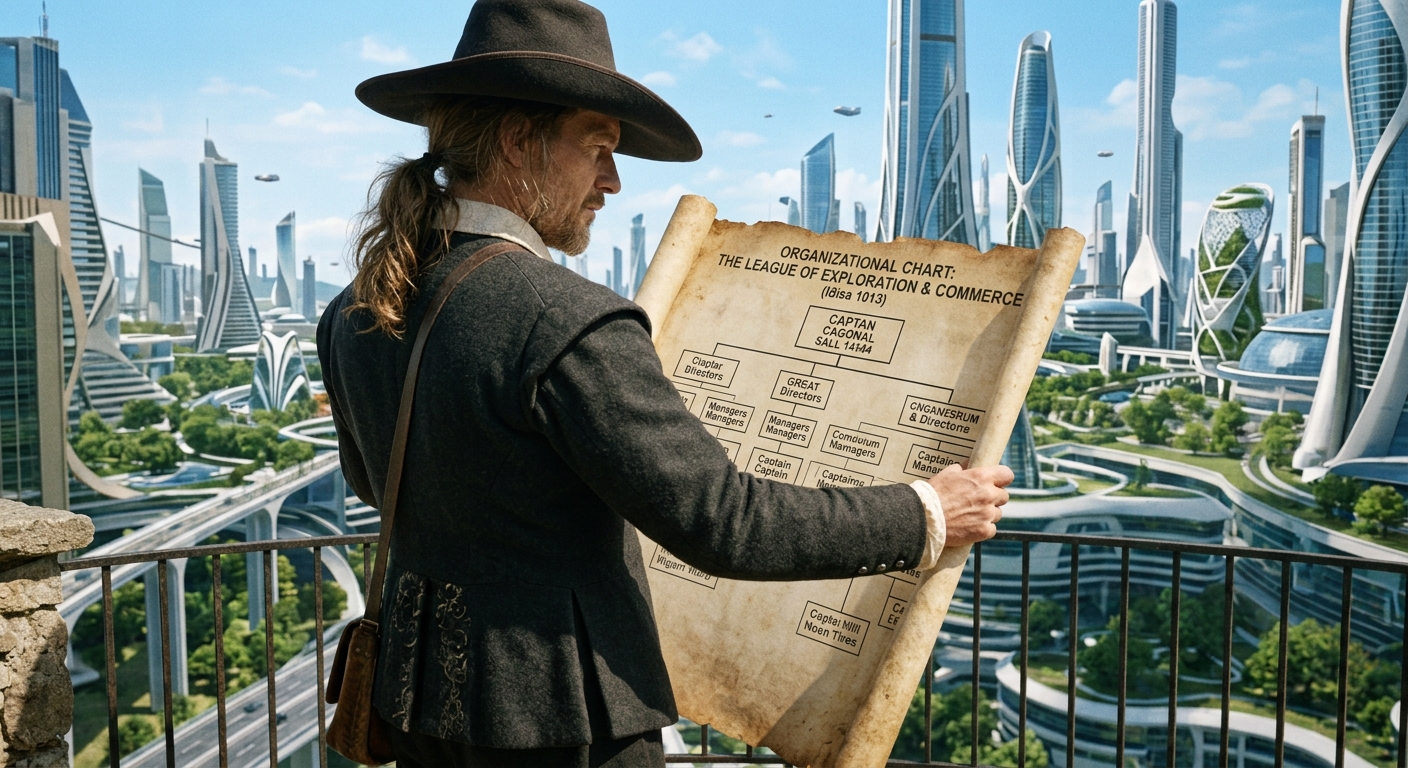
The above image was generated with Gemini AI, and Claude Opus assisted with the diagrams.
Discuss this article on Substack.