Attention grabbing headline. Not complete clickbait though. Follow me.
In a not-so-distant future, a computer professional starts his day. He fetches a mug of coffee from the kitchen, sits down at his workstation, and fires up his computer. A few seconds later, his screen presents this, and only this.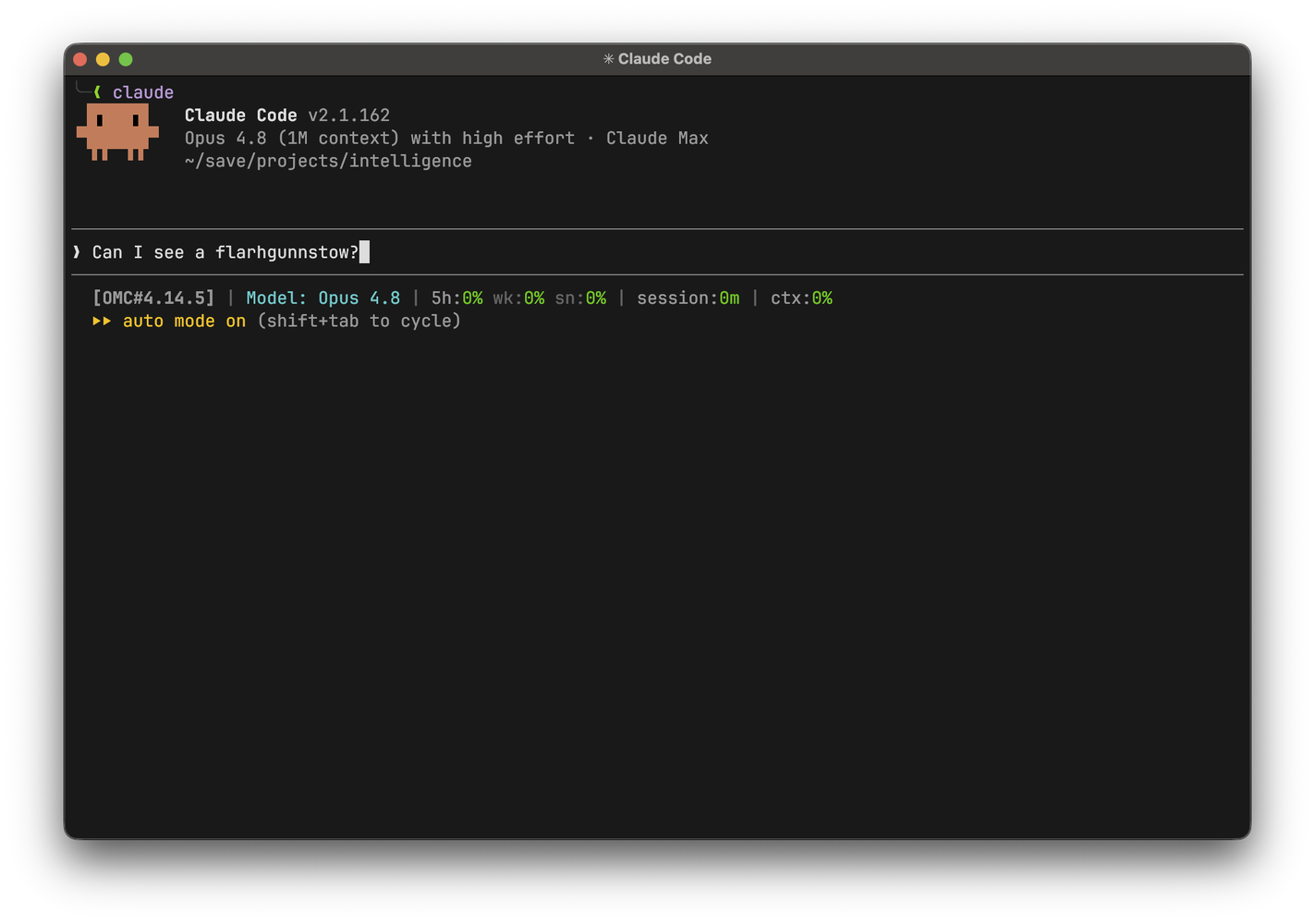
A terminal emulator, fullscreen. There's no GUI, it would just get in the way anyway. He doesn't even need a mouse (though he keeps one in a drawer nearby, nostalgia and all).
He starts typing. He describes, in clear and concise language, what he needs to get done today. He writes a few paragraphs that detail the problem he's looking to solve, the resources he has available to him, and the constraints he needs to work within. Then he hits 'Enter'.
A planning agent springs to life. It analyzes his prompt and recognizes some immediate information it needs. It fires up subagents that start exploring multiple strategies, others that start constructing and executing small proof-of-concept scripts to assess the feasibility of these different strategies. A plan is born.
There are many unanswered questions though. After all, what project can be completely described with just a few paragraphs? The agent gathers up all these questions and conducts an interview with the user. What about this use-case? How should this other situation be handled? Our computer professional answers these, and in the process thinks of a few more requirements that will need to be met. He mentions those as well. The agent goes back to work.
After a few iterations, the plan is ready to go. The user and agent agree they've covered everything in sufficient detail to begin. He smiles, takes another sip of coffee, and types "go".
That's far enough into this story to make the point. If you're actively working with AI-powered computer engineering, you already know this isn't a "not-so-distant future", it's exactly the technology we have available to us today. And the amount of work we can get done with it is astounding.
But the point I want to make in this article... what do we not see in this picture?
There's no development software!
Now if your mind is reeling with all the reasons what I just said is wrong, I'll admit I'm overstating things a bit for effect. Obviously, Claude Code, OpenCode, et. al. are all software, not to mention the LLMs that fuel them. But these client tools are all very simple compared to what we used to use. Remember ye olde IDEs of days long past (i.e. last year)? Your project structure was displayed on the left, your code in the middle, miscellaneous tools docked to the right and bottom. Dozens of tabs, pages upon pages of configuration options, countless plugins and extensions, all providing an enormous amount of functionality so you could write software.
Things have changed so much, so fast. Now, all we need is one of these agentic development tools to host an agent and provide it with some basic tools. The agent takes it from there. It spawns subagents so it can get things done in parallel. If it needs to reorganize or refactor some files, it just whips up a script right there on the fly, executes it, then throws it away. If it needs to perform an operation but doesn't have the capability, it grabs an MCP to extend its capabilities itself. If it needs more substantial functionality, it downloads the appropriate tools and libraries and runs those. It searches the web, evaluates options, and dynamically expands and reconfigures itself. And it does all of this behind the scenes while we sip coffee.
Now, we're currently in the middle of a transition phase between "the old way" and "the new way". Even for agentic development, there are multiple options out there. OpenCode, Claude Code CLI, JetBrains Air, GitHub Copilot CLI, others. But the differentiators between these options are vanishingly small. And they will always be small. If one of these tools implements a feature that proves to be useful, the others will tack the same feature on overnight. The maintainers of these tools are obviously using those same tools to blast out enhancements to their own software at warp speed.
For all intents and purposes, traditional development software is dead. Whether open-source or proprietary, free or paid, it's now defunct. An entire segment of the software industry wiped out virtually overnight. (It's still out there of course, you can still use it, you can still pay for it... but why?)
But that's just development software
Here's the main point I'm trying to make. Computer code is cheap and completely commoditized now. Before LLM-assisted coding, a large, proprietary codebase, protected by copyright alone, could be a significant intellectual-property asset for a company. That is no longer the case. What in the past would have taken years of development effort (and millions of dollars) can now be accomplished in months or even weeks, at a tiny fraction of the cost. In the past, organizations in an a competitive software market could rely on that expensive barrier to entry to suppress competition. That barrier is now gone. We can replicate an organization's proprietary software simply by describing it to our coding agents. Or even easier, just point those agents at the target's freely available online documentation and say "make that for me". Virtually overnight, I can offer a new, competitive product in the space. I can generate user documentation. I can have LLM-powered product support in place. I can create sales materials and even launch a marketing blitz. It's all so cheap and easy now.
The only remaining way organizations can protect their intellectual property investment is with utility patents, which in the US typically last twenty years. But patents like this can be a double-edged sword. They require the organization to publicly disclose exactly how their innovations work, which can be risky. I can point my LLM at that patent and ask it to develop an alternative that accomplishes the same result while not infringing on that patent. (Turns out Claude knows a lot about law too.) No guarantee it will be successful of course, but I wouldn't bet against it either.
So I'm calling it now. There is no future in commercial software. Unless the software implements a patent-protected algorithm that is so spectacular that the job can not be accomplished any other way, that software can be quickly and easily replicated. Thus, there are going to be free and open-source alternatives to virtually all commercial software that meet or exceed their performance. Need support for that open-source software? Just point your LLM at its codebase and documentation and start asking your questions. There's your support, and it's faster, cheaper, and smarter than anyone you'd call on the phone. Very soon, the only thing we'll be paying for is LLM tokens and hardware/compute. All the software will be free.
What about companies that rely on software license revenue?
I think they'd better reinvent themselves, and soon. And frankly, I think a lot of them are going to go out of business. But this is just one aspect of the sea change that AI is bringing to our industry, and many others. Our entire economy is going to have to adjust and adapt to the presence of AI, and the change is going to be staggering. Some people deny this, a lot of people don't like it (including me), and there's a lot of false cope being shuffled around. But none of these things are going to change the facts. So the best course of action is to start adapting now.